


Ontario Is Starting to Ask Who Owns the Data Centre
For years, the easiest way to describe Canadian data-centre infrastructure was by its address. Toronto, Montréal, Vancouver or Calgary. If the servers were physically in Canada, the service was usually described as Canadian infrastructure.
Ontario’s proposed Data Centre Playbook introduces another question that I think will become harder to ignore: who actually owns and operates the data centre?
The province posted its proposed framework on August 13, 2026. The consultation closed on September 12. It is still a proposal, not a finalized ownership rule.
The draft lays out three broad pillars for evaluating large new data-centre projects seeking access to Ontario’s electricity system:
- Economic development, including jobs, investment, tax revenue and benefits for domestic supply chains.
- Data security and digital sovereignty, including Canadian control over sensitive data and critical digital infrastructure.
- Community benefits and public trust, including local investment, workforce development and environmental impacts such as water use.
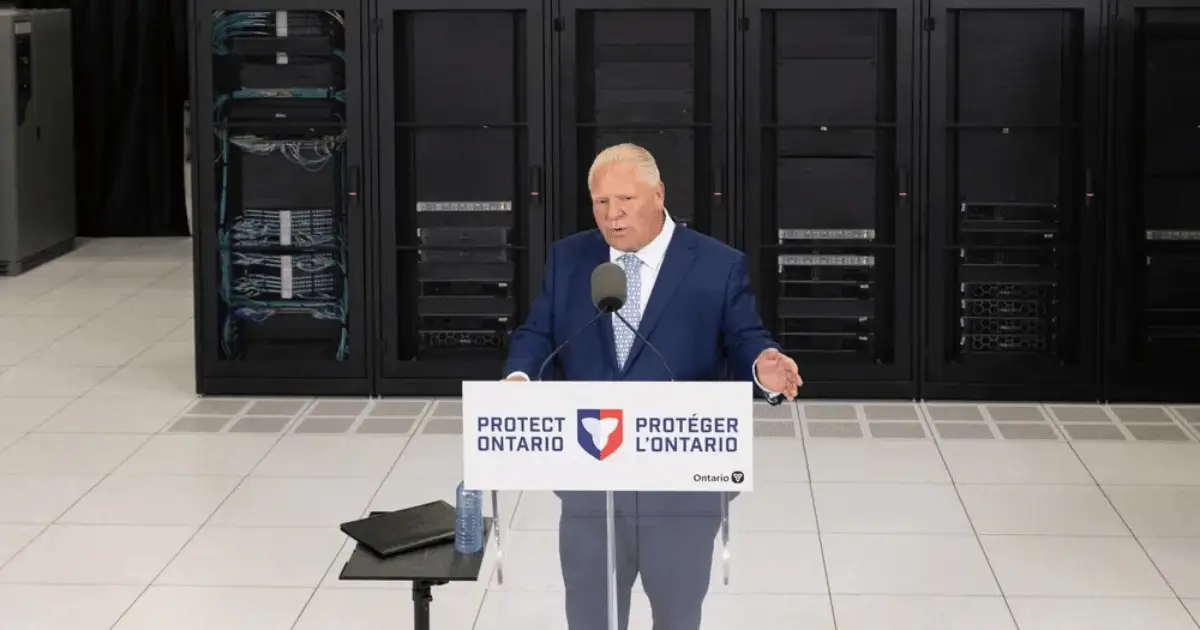
Inside the second pillar is the wording that matters for this article: Ontario is considering “a preference for Canadian-owned and operated data centres.”
That is a meaningful change in framing. It moves the discussion beyond where a server sits and toward who ultimately controls the company and infrastructure behind it.
The 10 GW number does not mean Ontario is about to build 10 GW of data centres. These are connection requests. Projects can be delayed, resized, rejected or cancelled.
It does explain why the province is changing the approval process. Ontario says the proposed queue is more than 50 to 100 times the 100 to 200 MW of demand it currently attributes to data centres participating in the ICI program.
Once data-centre demand begins competing for grid capacity at this scale, deciding which projects receive connections becomes an economic and infrastructure policy decision, not just a routine utility request.
But What Does “Canadian-Owned” Actually Mean?
This is where the proposal becomes much less straightforward.
Ontario has not defined “Canadian-owned” in the draft or set an ownership threshold. Legal analysis from Torys LLP also flags that gap. The final framework will need to explain how the province intends to treat different ownership structures.
A privately held company owned by Canadians may be relatively simple to classify. A publicly traded Canadian company is different. Its shares can be held by Canadians, pension funds, institutions and foreign investors at the same time.
Then there are infrastructure layers. The company operating a data centre may lease the building. A cloud company may lease capacity from a colocation operator. A Canadian web host can own the physical servers while renting rack space from a foreign-parented data-centre company.
For this article, I am mainly looking at the company controlling or operating the data-centre platform and its ultimate parent. I am not trying to trace the land title or real-estate ownership behind every individual building.
That is still only one layer of the picture, but it is a more useful starting point than assuming ownership from a Canadian street address.
Who Owns Some of Canada’s Major Data-Centre Platforms?
The table below is a representative sample, not a complete inventory of every Canadian data centre. It mixes carrier-neutral colocation platforms with Canadian telecom and AI infrastructure because Ontario’s proposal raises the ownership question across the wider data-centre market.
| Operator | Canadian Footprint | Parent / Control | Ownership Context |
|---|---|---|---|
| eStruxture | National footprint across Montréal, Toronto, Vancouver and Calgary, with 500+ MW of secured power reported by the company. | Montréal-based eStruxture Data Centers. | eStruxture says it remains 100% Canadian-owned and operated. |
| Bell AI Fabric | Canadian AI infrastructure including the 300 MW Saskatchewan campus now under development, plus other Bell AI Fabric locations. | Bell Canada is wholly owned by Montréal-headquartered BCE Inc. | Canadian public-company parent and Canadian operator. |
| TELUS Sovereign AI Factories | Operational Rimouski, Quebec AI facility with a larger B.C. expansion planned. | TELUS Corporation. | Canadian public-company operator. TELUS describes its sovereign AI infrastructure as Canadian-controlled and operated. |
| Cologix | 22 facilities across Montréal, Toronto and Vancouver in the company’s 2025 portfolio, plus a Calgary carrier-hotel acquisition. | Stonepeak has held a majority interest in Denver-headquartered Cologix since 2017. | Large Canadian physical footprint under a U.S.-based parent investment platform. |
| Equinix | 16 Canadian data centres across major markets, with more than 670,000 square feet of colocation space reported by Equinix. | Equinix, Inc., incorporated in Delaware with executive offices in Redwood City, California. | U.S. public-company operator with substantial Canadian infrastructure. |
| Telehouse Canada | 151 Front Street West, 250 Front Street West and 905 King Street West in Toronto. | Telehouse Canada is part of Japan’s KDDI Corporation. KDDI established its Canadian data-centre subsidiary as 100% KDDI-owned. | Japanese-parented operator of major Toronto carrier-hotel infrastructure. |
| Digital Realty | Three Toronto-area data centres with roughly 697,000 square feet listed by Digital Realty. | Digital Realty, headquartered in Austin, Texas. | U.S. public-company operator. |
| OVHcloud | Large Beauharnois, Quebec campus plus Toronto operations. OVHcloud reports about 90,000 servers in Canada. | French OVHcloud group. | French-parented cloud and data-centre operator with major Canadian physical infrastructure. |
| QScale | Q01 AI campus in Lévis, Quebec with 142 MW of power capacity. | Acquired by Infrastructure at Goldman Sachs Alternatives in May 2026. QScale’s founders and management reinvested and continue to lead the business. | Quebec-founded and operated, but now a Goldman Sachs Alternatives portfolio company. |
I do not think every row should be reduced to a simple green “Canadian” or red “foreign” label. Corporate control can be more complicated than that, especially for public companies and investment-fund ownership.
What matters is being specific. Canadian location, Canadian operation, Canadian incorporation and Canadian ultimate ownership are not automatically the same thing.
QScale and 151 Front Show Why Ownership Research Gets Complicated
QScale changed ownership without moving the data centre
QScale is one of the clearest examples of why location alone can leave out an important part of the story.
The company was founded in Quebec, its flagship Q01 campus is in Lévis, and the campus has 142 MW of power capacity. In May 2026, however, Infrastructure at Goldman Sachs Alternatives acquired QScale. The founders and management reinvested alongside Goldman Sachs and continue to lead the business.
So the physical infrastructure remains in Quebec and the operating team remains in place, but the ownership structure changed materially.
That does not make the facility less physically Canadian. It does show why I prefer to research where the infrastructure is located and who ultimately controls the company as two separate questions.
151 Front is Canadian infrastructure under a Japanese parent
Toronto’s 151 Front Street West is another useful example. Anyone who spends time looking at Canadian networks eventually comes across that address. It is one of the country’s most important carrier-hotel and interconnection buildings.
Telehouse Canada operates the major 151 Front facility as well as nearby sites at 250 Front and 905 King. Telehouse Canada is part of KDDI Corporation of Japan. KDDI’s corporate filing for its Canadian data-centre subsidiary lists KDDI as the 100% shareholder.
The infrastructure is unquestionably in Canada. Its ownership chain is international.
Canadian financing is not the same as Canadian parent ownership
Cologix adds another layer. It has one of the largest Canadian colocation footprints, with 22 facilities reported across Montréal, Toronto and Vancouver before its Calgary expansion. Stonepeak has held a majority interest in Cologix since 2017, and Stonepeak lists Cologix’s headquarters as Denver.
Canadian institutions can still finance individual facilities inside that platform. That matters economically, but financing a Canadian project is not the same as owning the parent company.
eStruxture Is a Clear Large Canadian-Owned Example
On the other side of the ownership question is Montréal-based eStruxture.
eStruxture describes itself as Canada’s largest Canadian-owned data-centre provider and says it remains 100% Canadian-owned and operated. The company has facilities across Montréal, Toronto, Vancouver and Calgary and says it has secured more than 500 MW of power as it expands into higher-density AI infrastructure.
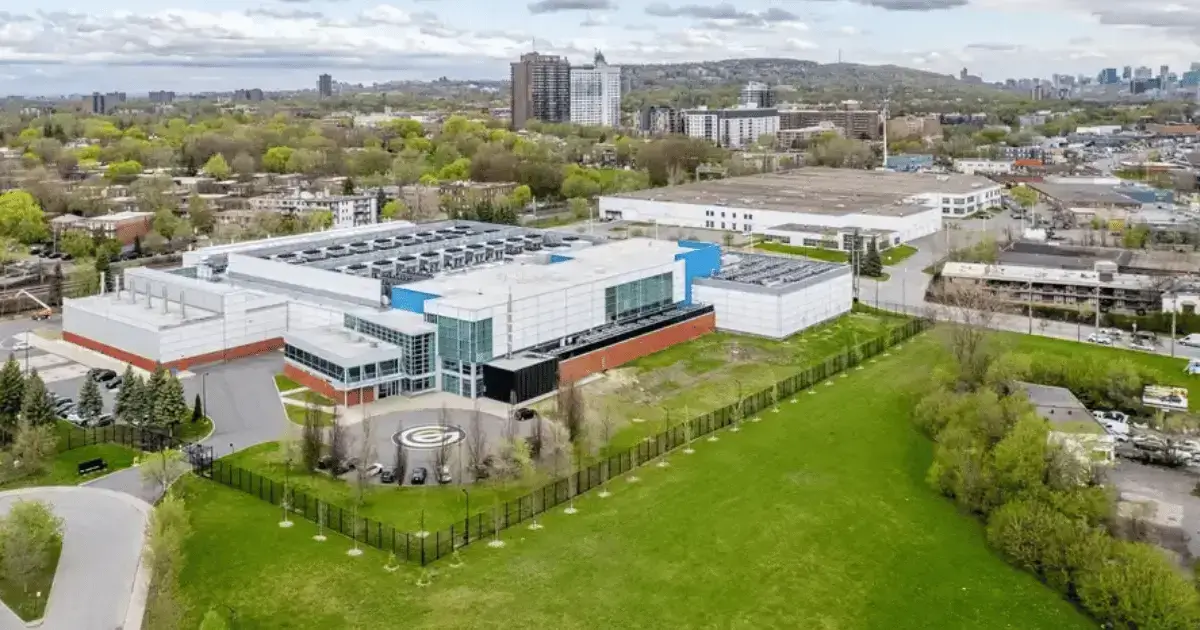
The 7001 Saint-Jacques site is especially interesting because the building itself tells part of the infrastructure story. The former newspaper printing facility was converted into eStruxture’s MTL-2 data centre. eStruxture lists more than 187,000 square feet of colocation space and 30 MW of total capacity at the location.
For Ontario’s proposed ownership preference, eStruxture is a useful benchmark because there is less ambiguity between Canadian location, Canadian operation and the company’s own ownership claim.
That still does not mean every customer workload is automatically sovereign. Customers would still need to verify where their data, backups, networks and administrative access actually sit. Ownership is one check, not the whole test.
Data Residency, Ownership and Sovereignty Are Three Different Checks
One thing I keep running into while researching Canadian hosting is how easily three separate ideas get blended together.
Data residency
This answers a physical question: where is the data stored? If the production server and backups are in Toronto, that may satisfy a Canadian data-residency requirement.
Company ownership
This asks: who ultimately owns or controls the company providing the service? A data centre in Toronto can still be part of a U.S., Japanese or French corporate group.
Digital sovereignty
This is broader. It can include physical location, ownership, administrative control, infrastructure control, cybersecurity, legal jurisdiction, supply chains and dependence on foreign technology.
I go into this distinction in more detail in HostScout’s data residency vs. data sovereignty guide. The recent Bell Saskatchewan AI infrastructure announcement shows the same ownership discussion emerging at an even larger scale.
A Canadian street address proves location. It does not, by itself, prove Canadian ownership, Canadian network control or complete digital sovereignty.
The Web Hosting Industry Has the Same Ownership Problem
This is not only a hyperscale AI or utility-grid issue.
A web host can advertise “Canadian servers” and be completely accurate. That statement still does not automatically tell me:
- who owns the hosting company,
- who owns the physical servers,
- who operates the data centre,
- which network announces the IP addresses,
- where backups are stored, or
- whether the company is ultimately controlled from another country.
A Canadian-owned web host could colocate company-owned servers inside a foreign-parented data centre. In that case the host can still be Canadian-owned, the hardware can still be owned by the Canadian host, and the data can still remain physically in Canada.
None of those facts contradict the data-centre building having a foreign parent.
That is why HostScout’s provider research is built around layers instead of one label. The infrastructure research pages look at company identity, hardware, ASN and IP records, routing and facility evidence separately. The Is It Hosted In Canada? tool can also help establish the network and geolocation side of the picture.
Five questions I would ask before calling infrastructure “Canadian”
- Who owns the company? Start with the operating company and work upward to the ultimate parent.
- Who owns the hardware? Owning physical servers is different from reselling another company’s infrastructure.
- Where is the hardware located? Company ownership does not establish data residency.
- Who operates the network? ASN records, IP ownership, peering and routing can provide another layer of evidence.
- Who operates the data centre? The company selling the service may not own or operate the building where the equipment is installed.
For me, that fifth question is becoming more interesting. Ontario is now asking a similar ownership question at the scale of provincial electricity planning.
What Happens Next?
Ontario’s public consultation is closed. The province says feedback will be used to shape the final Data Centre Playbook and its broader AI strategy.
The major unanswered question is the definition of Canadian ownership. The draft does not tell us what percentage would qualify, how a TSX-listed company would be treated, or what happens when a Canadian operator is controlled by a foreign infrastructure fund.
It also does not yet tell us exactly how much weight ownership would receive compared with jobs, investment, domestic supply chains, community benefits, cybersecurity, water use and electricity costs.
Those details matter because the queue is huge. Ontario says proposed data-centre connection requests could exceed 10 GW, more than 40% of recent provincial peak demand.
At that scale, access to electricity becomes scarce infrastructure. The final rules will show whether Canadian ownership becomes a practical advantage in securing that capacity or remains one factor among many.
For now, the most important change is conceptual. Ontario has put the ownership question directly into the data-centre policy discussion.
The old question was: where is the server?
The next one is: who actually owns what is behind it?
Frequently Asked Questions
Does Ontario require data centres to be Canadian-owned?
Not currently. Ontario’s draft Data Centre Playbook proposes a preference for Canadian-owned and operated data centres as part of its data-security and digital-sovereignty assessment. The consultation closed on September 12, 2026, and the proposal has not yet become a final ownership requirement.
Has Ontario defined what “Canadian-owned” means?
Not in the draft. The proposal does not set a Canadian ownership percentage or explain how publicly traded companies, foreign investment funds or mixed ownership structures would be treated.
How much electricity are proposed Ontario data centres requesting?
Ontario says prospective data-centre projects seeking connections could collectively exceed 10,000 MW. The province compares that with recent Ontario peak electricity demand of roughly 25,000 MW.
Is a data centre in Canada necessarily Canadian-owned?
No. A facility can be physically located in Canada while the company controlling the data-centre platform is headquartered or ultimately controlled outside Canada.
What is Canada’s largest Canadian-owned data-centre provider?
eStruxture describes itself as Canada’s largest Canadian-owned data-centre provider and says it remains 100% Canadian-owned and operated, with a national footprint across Montréal, Toronto, Vancouver and Calgary.
Is 151 Front Street West Canadian-owned?
Telehouse Canada operates the major 151 Front Street West carrier-hotel facility in Toronto. Telehouse Canada is part of KDDI Corporation, a Japanese telecommunications group.
Is OVHcloud Canadian-owned?
No. OVHcloud is a French cloud group. It nevertheless operates major physical infrastructure in Canada, including its large Beauharnois, Quebec campus.
Is Canadian ownership the same as Canadian data residency?
No. Data residency concerns where data is physically stored. Company ownership concerns who ultimately controls the provider. Digital sovereignty can include both of those issues as well as operational, technical and legal control.
Sources
I used Ontario’s proposal as the primary policy source and then checked company, investor and regulatory material for the ownership and facility details below. Corporate structures can change, so I treat this as a dated September 2026 snapshot.
- Environmental Registry of Ontario, August 13, 2026 · Proposed Economic and Strategic Assessment Framework for New Data Centres, including the three assessment pillars and electricity-demand figures.
- Torys LLP, August 24, 2026 · Legal analysis of the draft Playbook and the absence of a defined Canadian-ownership threshold.
- eStruxture, March 31, 2026 · Company statement describing itself as 100% Canadian-owned and operated with more than 500 MW of secured power.
- eStruxture MTL-2 · 7001 Saint-Jacques facility details, including 187,000+ square feet and 30 MW of capacity.
- QScale, May 13, 2026 · Goldman Sachs Alternatives acquisition and reinvestment by QScale’s founders and management.
- QScale Q01 Campus · Lévis campus specifications including 142 MW of power capacity.
- Telehouse Canada · Canadian operations and KDDI parent relationship.
- KDDI Corporation · Establishment of its Canadian data-centre subsidiary with KDDI listed as 100% shareholder.
- Cologix · Canadian portfolio figures of 22 data centres, 1,057,000 square feet and 94 MW across Montréal, Toronto and Vancouver.
- Stonepeak · Majority interest in Cologix since 2017 and Denver headquarters.
- Equinix Canada · 16 Canadian data centres and more than 670,000 square feet of colocation space.
- Equinix 2025 Form 10-K · U.S. incorporation and Redwood City executive offices.
- Digital Realty · Toronto footprint of three data centres and approximately 697,000 square feet.
- Digital Realty corporate contact · Austin, Texas corporate headquarters.
- OVHcloud · French-group context and approximately 90,000 servers in Canada.
- TELUS, September 24, 2025 · Rimouski Sovereign AI Factory and Canadian-control claims.
- BCE 2025 Annual Information Form · Bell Canada listed as a 100% BCE subsidiary and BCE’s Quebec head office.